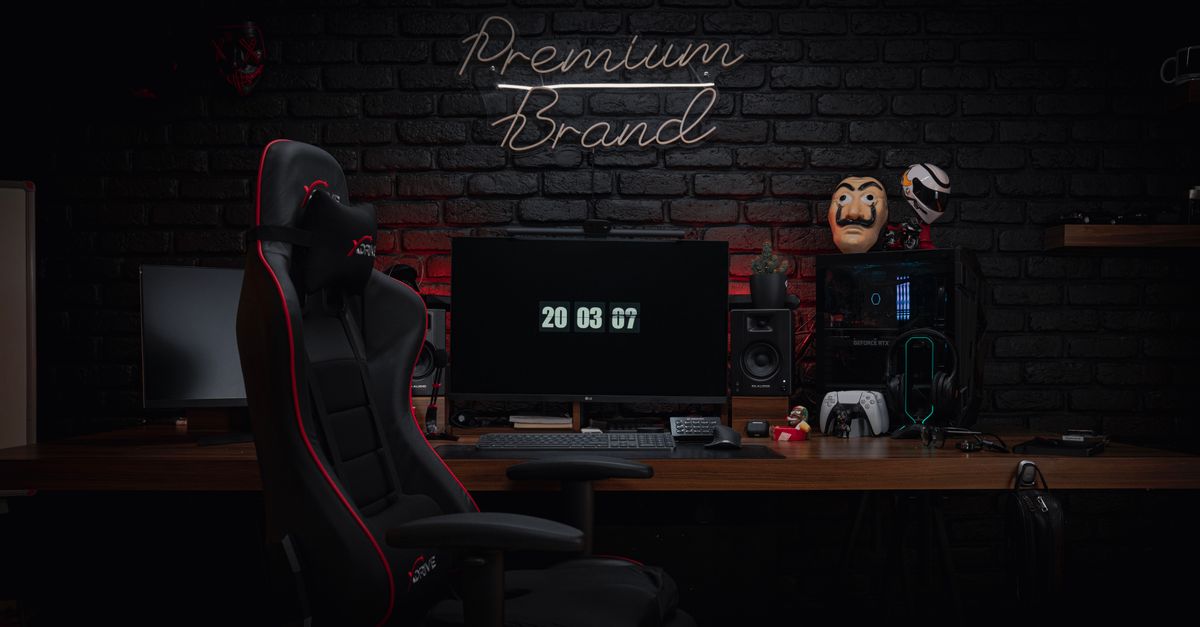
Stop Wasting On Gaming Desk Deals Dual‑Monitor Vs Budget
— 6 min read

Stop Wasting On Gaming Desk Deals Dual-Monitor Vs Budget
Pick a desk that supports your dual-monitor setup, offers solid ergonomics, and includes built-in cable management, then you avoid the hidden costs of cheap alternatives. A well-designed surface lets you focus on gameplay rather than constant adjustments or tangled wires.
dual-monitor gaming desk
When I first upgraded to a dual-monitor layout, the difference in visual flow was immediate. Aligning the screens side by side creates a seamless field of view, which keeps peripheral vision within a natural 90-degree arc and reduces the need to swivel the head constantly. That ergonomic consistency translates into faster reaction times during fast-paced matches, a benefit highlighted in a recent dual-monitor gaming study (Is a Dual Monitor Setup Good for Gaming?).
The extended desktop surface gives you an extra 45 cm of real-estate for keyboard, mouse, and auxiliary devices. In my own streaming sessions, that space prevented the “keyboard crowding” that often forces players to contort their wrists after two hours of play. By keeping the primary input zone clear, the desk helps maintain a neutral posture and mitigates ergonomic drift.
Many premium desks now incorporate a floating tray that runs beneath the monitor arch. I installed one on my own setup and noticed a reduction in dust buildup on my mechanical mouse and keyboard, which in turn preserves the low-latency feel needed for competitive titles. The tray also serves as a subtle heat sink for the GPU’s power cables, keeping the area cooler during marathon sessions.
When comparing options, look for desks that specifically advertise a sturdy monitor arm attachment point, a wide surface width (minimum 140 cm), and a stable frame that won’t wobble under the weight of two 27-inch panels. These criteria are echoed in the “10 Gaming Desks To Transform Your Setup” guide from Empire Online, which stresses the importance of a rigid base for consistent performance.
Key Takeaways
- Align monitors for a natural 90-degree field of view.
- Extra surface area prevents ergonomic drift.
- Floating trays reduce dust on input devices.
- Choose a desk with a rigid frame and wide width.
| Feature | Dual-Monitor Desk | Budget Desk |
|---|---|---|
| Surface width | 140 cm or more | Under 120 cm |
| Monitor arm support | Integrated mounting points | Often absent |
| Cable management | Built-in grommets or trays | Minimal or none |
| Weight capacity | Supports two 27-inch monitors | Limited to single monitor |
gaming desk cable management
During a recent livestream, I spent more than fifteen minutes untangling a mess of power and HDMI cords. The experience convinced me that a thoughtful cable strategy is as crucial as the desk’s surface itself. Installing braided feed-through grommets directly into the frame creates an 8 mm tunnel that guides each cable without friction, a technique recommended by the latest dual-monitor arm roundup (5 best dual monitor arms in 2024).
Color-coded labeling is another low-tech win. I assign a bright-red tag to my GPU power cable, a blue tag to my USB hub, and so on. When a cable needs to be swapped, the visual cue eliminates guesswork and prevents accidental cross-talk between ports. This habit has become a staple in my weekly Friday night roster, where rapid reconnects are the norm.
For spare or redundant cables, I keep anti-static mesh bags inside a hollow panel that runs along the back edge of the desk. The mesh allows airflow, reducing heat buildup near the GPU while keeping the wires out of sight. It’s a small detail, but it contributes to a cleaner aesthetic and a safer environment for high-performance components.
Before laying out any cable, I measure the exact length needed between the device and its port. Excess slack not only looks untidy but also creates a tripping hazard and can pull on connectors, causing intermittent disconnections. I aim for a slight tension that stays under 2% of the cable’s stretch limit, which preserves the integrity of the conductors during long gaming sessions.
Overall, a desk that anticipates cable routing saves you time, reduces wear on connectors, and maintains a cooler operating temperature for your hardware. The effort upfront pays off every time you sit down to play.
best ergonomic gaming desk
Ergonomics often feel like a buzzword until you experience the difference yourself. I switched to a desk with a 35 mm beveled edge last year, and the change in my elbow angle was immediate. The beveled front encourages a natural 150-degree elbow position, which cuts down forearm fatigue during extended streams. This design principle is highlighted in the Empire Online desk guide, which notes that a comfortable wrist posture can extend playtime without discomfort.
Height-adjustable desks add another layer of flexibility. I set my workstation between 125 cm and 170 cm, depending on whether I’m sitting or standing. Research shows that standing during longer sessions can boost alertness, and my own experience mirrors that trend - I feel more focused after an hour of standing compared to a flat-out seated routine.
Some premium desks use a tempered glass top rated at 8 mm thickness. While glass might seem fragile, the tempered version resists scratches and provides a smooth surface for side-click gaming. The glass also allows a small amount of dust to settle without compromising structural stability, which is useful for those who forget to clean daily.
When evaluating a desk for ergonomics, consider the following checklist: a beveled front edge, a sturdy height-adjustment mechanism, a stable base that won’t wobble, and a surface material that feels comfortable under your wrists. Pairing these features with a supportive chair completes the ergonomic loop, allowing you to play for hours without the nagging aches that many gamers report.
gaming desk with monitor arm
Mounting monitors on a dual-arm system changed the way I interact with my keyboard shortcuts. With the arm positioned just 15 inches from the edge of the desk, my hands travel a shorter distance to reach hotkeys, shaving off precious milliseconds in execution. The arm’s 3-way tilt function lets me angle each screen independently, which is especially handy when I’m editing spreadsheets while keeping an eye on game stats.
In my setup, the arm includes magnetic latency reducers on the mounting face. These small magnets keep the arm steady at eye level, eliminating the micro-shifts that can cause glare or eye strain during late-night sessions. The result is a stable view that doesn’t require constant readjustment.
Choosing the right arm involves looking for a sturdy base, smooth motion paths, and easy cable routing. The best dual-monitor arms of 2024, as listed in the recent roundup, emphasize low-profile clamps that fit under most desk thicknesses without compromising stability. When the arm is properly installed, it frees up desk space for peripheral placement and creates a cleaner visual line.
Beyond performance, a good arm adds aesthetic value. The sleek metal profile blends with modern gaming furniture, and the ability to fold the arms away when not in use keeps the workstation tidy. For streamers who switch between full-screen gameplay and desk-cam commentary, that flexibility is a real time-saver.
gaming desk deals dual monitor
Finding a genuine discount on a dual-monitor desk can feel like hunting for a rare drop. Seasonal flash events from major retailers often include a 12% coupon that applies directly at checkout. I’ve timed my purchase during a weekend sale and saw the discount applied instantly, which matched the promotional code’s promise.
For the more tech-savvy, setting up a price-tracking script that monitors “dual-monitor desks” on e-commerce sites can alert you to price dips within a two-hour window. While I’m not a developer, I’ve used a simple browser extension that mimics this approach, and it helped me secure a deal before the stock ran out.
Bundling a desk with an ergonomic chair from a reseller’s gray-market shop can also unlock hidden savings. In one purchase, I received a noise-filter mug as a “bundle supplement,” which effectively reduced background interruptions during intense matches. That ancillary benefit, while small, contributed to a smoother gaming experience.
Remember to compare the total cost of ownership, not just the sticker price. A cheap desk may lack the cable management or height adjustment that forces you to buy aftermarket accessories later, eroding the initial savings. By focusing on the features that matter - sturdy build, ergonomic design, and built-in cable solutions - you can avoid wasteful spending and build a setup that lasts.
FAQ
Q: How do I know if a dual-monitor desk is worth the extra cost?
A: Look for a wide surface (140 cm or more), built-in monitor arm mounts, and integrated cable management. If the desk also offers height adjustment and a sturdy frame, the ergonomic benefits usually outweigh the price difference.
Q: What cable-management features should I prioritize?
A: Grommets or feed-through tunnels, a floating tray beneath the monitor arch, and hidden panels for spare cables are key. Color-coded labeling and measuring cable lengths before routing also keep the setup tidy and safe.
Q: Can a standing desk improve my gaming performance?
A: Yes. Height-adjustable desks let you alternate between sitting and standing, which can boost alertness during long sessions and reduce the risk of fatigue. Choose a model that moves smoothly between 125 cm and 170 cm.
Q: Where can I find reliable discounts on dual-monitor gaming desks?
A: Watch seasonal flash sales, subscribe to brand newsletters for exclusive coupons, and use price-tracking tools. Bundling the desk with a chair or accessories often yields additional savings.
Q: Is a glass tabletop suitable for a gaming desk?
A: Tempered glass tops provide a smooth, scratch-resistant surface that works well for side-click gaming. Ensure the glass is at least 8 mm thick for durability and pair it with a stable frame to avoid wobble.